

In small towns, you never ignore a problem.
A loose step on the wharf, a weird noise on the engine- you deal with it now, or you deal with something worse later. Ottawa apparently hasn’t learned that lesson yet.
Ottawa’s decision to scale back refugee health coverage is not genuine cost-cutting. It’s yet another attempt to ignore reality, delaying the fallout until it’s impossible to ignore. That’s exactly what Ottawa is doing—abetting a crisis in slow motion.
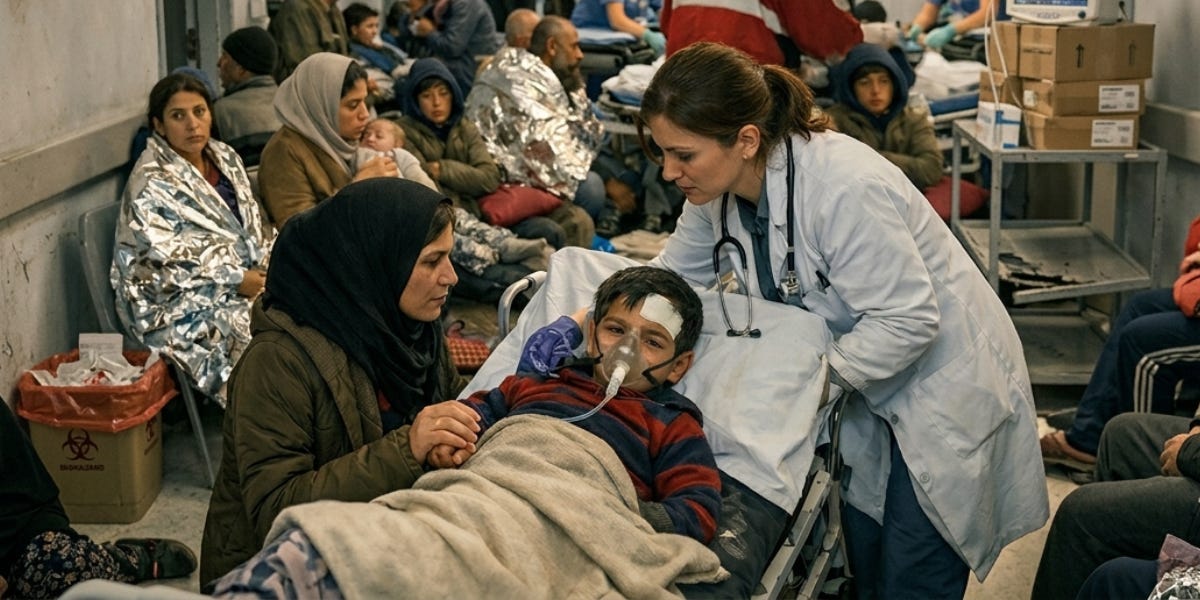
The federal government has begun scaling back parts of the Interim Federal Health Program—the system that covers basic healthcare for refugees and asylum claimants while their cases are processed. These changes are set to take effect starting in May 2026, when refugees would begin paying $4 per prescription and about 30 percent of the cost for services such as dental and vision care, counselling, and certain assistive devices.
Canada doesn’t publish a provincial breakdown for this program, so the exact numbers are hard to pin down. But what we do know is that Newfoundland and Labrador receives very few asylum claims compared to the rest of the country, fewer than a dozen in the first half of 2025, which puts the province near the bottom nationally. In a province with creaking rural hospitals and an aging population, even a small increase in people delaying care until it becomes a crisis is a problem nobody can afford.
But the situation is about to shift, and fast.
The province struck a deal to take in relocated claimants from Ontario. The first wave- 50 people- arrived in Newfoundland at the end of March last year. The province has committed to 290 total, with a longer-term target of 490.
When people can’t afford preventative care, they delay it. They wait and hope things improve. Sometimes they do. But often they don’t. And when it gets serious enough, they end up in the one place that never turns anyone away- the emergency room. The cost doesn’t disappear. It just lands somewhere else.
We’ve already watched this play out. It is not the first time provinces have been left holding the bag on this. In 2012, the Harper government cut the same program, and several provinces quietly set up their own programs to cover people who fell through the gap Ottawa created. The Saskatchewan premier at the time, Brad Wall, called out the federal government directly after it emerged that a refugee claimant with lymphoma was going to lose chemotherapy coverage. A court judge ruled two years later that the cuts caused genuine harm, particularly to children. Ottawa eventually restored the coverage. The savings never materialized. The costs just moved.
That’s what cost shifting looks like in practice- a federal announcement, a provincial scramble, and a cancer patient caught in the middle. Nobody has announced plans to do that this time. The Canadian Association of Social Workers has already written to the federal immigration minister, warning that the changes will push costs onto provincial systems and the non-profit sector, which is already stretched thin. So far, Ottawa hasn’t responded publicly.
In small towns, you never ignore a problem.
Newfoundland and Labrador is a small province with a big healthcare problem and not much room to absorb someone else’s budget decisions. The 2012 playbook ended with Ottawa restoring most of what it cut. The question is how much harm is done before that happens again.
In Newfoundland and Labrador, one in ten emergency room patients left without being treated in 2024- that is up a whopping 94 percent since 2019. That’s not a refugee problem. That’s a system that’s already out of capacity. When Ottawa cuts preventative coverage, and people delay care until it becomes a crisis, that crisis lands in those same emergency rooms. A province that can’t keep up with current demand gets handed more of it. That is not a side effect of this policy. That’s what the policy does.
As of July 2024, 25.2 percent of NL’s population is aged 65 or older- well above the national average of 19.5 percent. The province can’t keep absorbing costs created by federal decisions. The province has built immigration pathways specifically designed to keep MUN graduates here after they finish their degrees. Whether enough of them are staying is still an open question- but the intent is clear. Refugee families are turning up in towns that hadn’t seen a new face in years. For a province hollowed out since the cod moratorium, that matters more than it looks from the outside. But none of it sticks if people can’t sort out the basics. And healthcare is pretty basic.
Yeah, $900 million is real money, and it’s gone up a lot. But the program isn’t permanent- it runs until someone qualifies for the same provincial plan the rest of us are on. We tried cutting it before. It didn’t work.
That isn’t charity. It’s a good policy.
Problems pushed down the road have a way of coming back. And when they do, the bill rarely lands on the people who made the decision. It lands on provinces, taxpayers, and the people who rely on public healthcare.
Ottawa made this decision. Once again, Newfoundland will live with it.
Editorial Note: This article is an opinion and analysis by the author. Facts and policy references are drawn from publicly available materials or verified reporting.